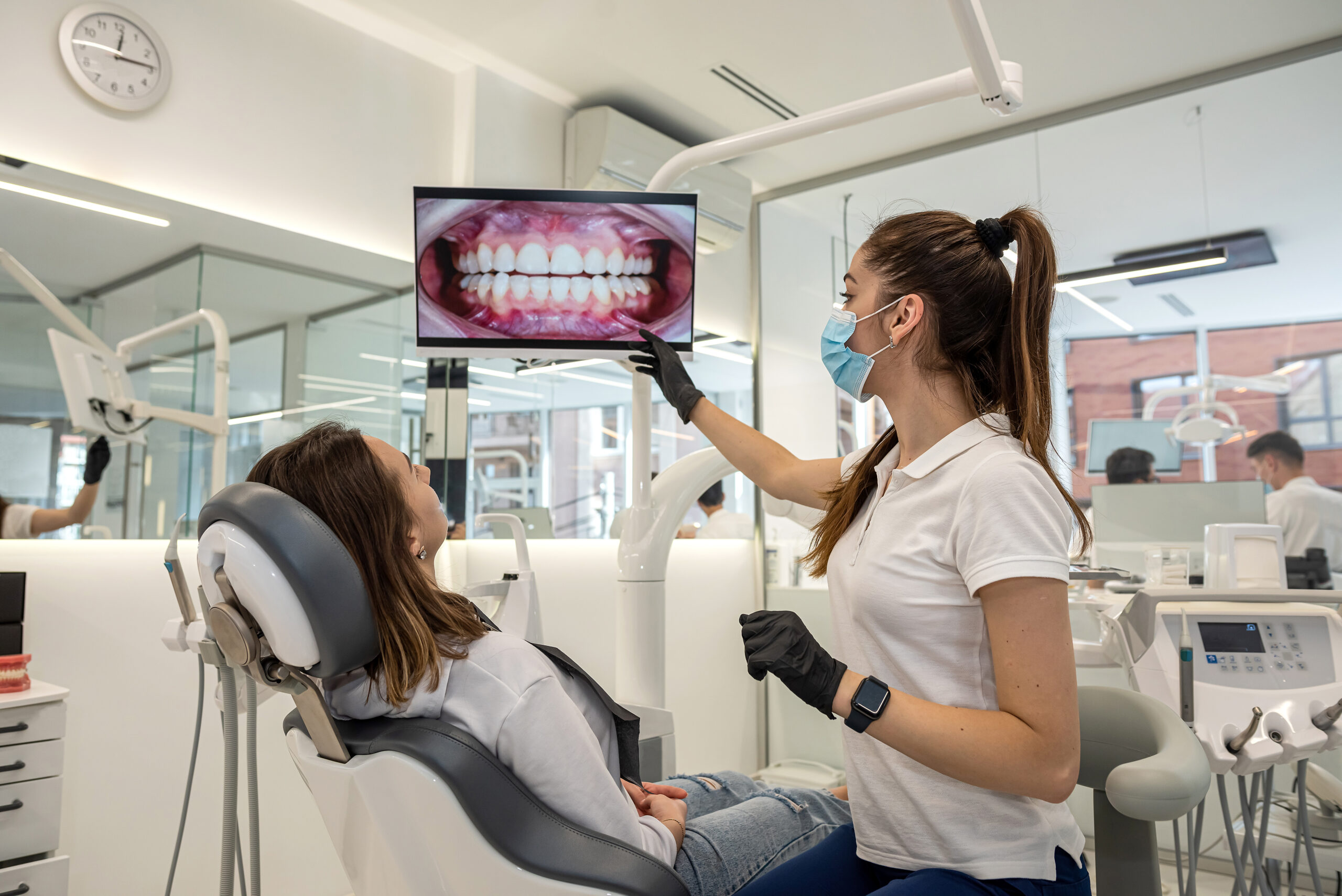
Not every cavity begins with a hole in the tooth. Early decay can first appear as an area where minerals have been lost from the enamel, and catching it at that stage can change what treatment looks like. In certain cases, Curodont can be applied without drilling to support the tooth’s natural remineralization process before the decay progresses further.
Johns Creek Dental Associates offers Curodont as part of our preventive dentistry care. The first step is to determine how far the decay has progressed, as Curodont is intended for early lesions rather than for every cavity. When we detect decay early enough, we can discuss whether this treatment is appropriate or whether the tooth needs a different approach.
How Curodont Works on Early Cavities
Curodont uses a short chain of amino acids called a self-assembling peptide. After we clean and prepare the tooth, we brush the liquid onto the early lesion, where it seeps beneath the surface and forms a tiny scaffold. That scaffold helps guide minerals from your saliva into the weakened enamel, which may allow the tooth to rebuild from the inside.
According to a randomized clinical trial published in Scientific Reports in 2020, early white spot lesions treated with this peptide shrank more than those given a placebo or fluoride varnish, and no safety concerns were reported. The treated spots did not fade completely, so we first talk through realistic expectations with you. The study also found applying the peptide before fluoride varnish did not measurably reduce the varnish’s benefit.

Who May Be a Good Candidate for Curodont
Curodont works best on early lesions where the enamel surface is still intact. During your exam, our dentists may recommend it for situations like these, and not every early spot needs treatment right away:
- White spots: these chalky patches on the enamel sometimes show up after braces.
- Early enamel changes: small areas of enamel breakdown may appear on X-rays before a true hole forms.
- Patients of many ages: clinical studies have included children, teens, and adults.
If decay has already broken through the enamel, Curodont is not the right fit, and we can discuss restorative dentistry options such as fillings or crowns. Our goal is a clear plan you feel comfortable with, whichever path makes the most sense for your tooth, and you are welcome to ask questions at every step.
Catching Early Decay With Pearl AI and Digital X-Rays
Early decay does not always cause pain or leave something visible in the mirror. At Johns Creek Dental Associates, we use Pearl AI alongside digital X-rays to help identify areas that deserve a closer look. Pearl can highlight possible signs of decay on an X-ray, giving our team additional information to consider alongside what we see during your exam. Our doctors still review the findings and make the final decision about your care.
That early detection can make a difference when considering Curodont. If we find decay at an early stage, Curodont may be an option before the tooth requires more extensive treatment. Depending on what we see, we may also recommend monitoring the area or treating it another way. For younger patients, Dr. Choi also draws on her experience in pediatric dentistry when evaluating early changes in developing teeth.
What to Expect During Your Visit
If your exam and digital X-rays show that the decay is still at a stage where Curodont may be appropriate, treatment does not require drilling into the tooth. We clean and prepare the area before applying the liquid directly to the affected enamel. From there, Curodont is designed to support the natural remineralization process within the early lesion.
The change happens over time rather than during a single appointment, so we may check the area again at a future visit. Regular dental cleanings also give us an opportunity to monitor your teeth and identify any new areas of concern. Brushing with fluoride toothpaste and limiting frequent exposure to sugary drinks can help support your enamel between visits.
Ask About Drill-Free Care at Johns Creek Dental Associates
We work with many dental insurance plans, including Delta Dental PPO, Cigna Dental, and MetLife, and offer financing through Cherry and Sunbit, as well as an in-house membership plan. If a recent exam revealed an early cavity or you have noticed a white spot on a tooth, request an appointment with our Johns Creek team to see whether Curodont may be an option.