
Medically Reviewed by Dr. Hah Neul Choi, DDS on July 28, 2026
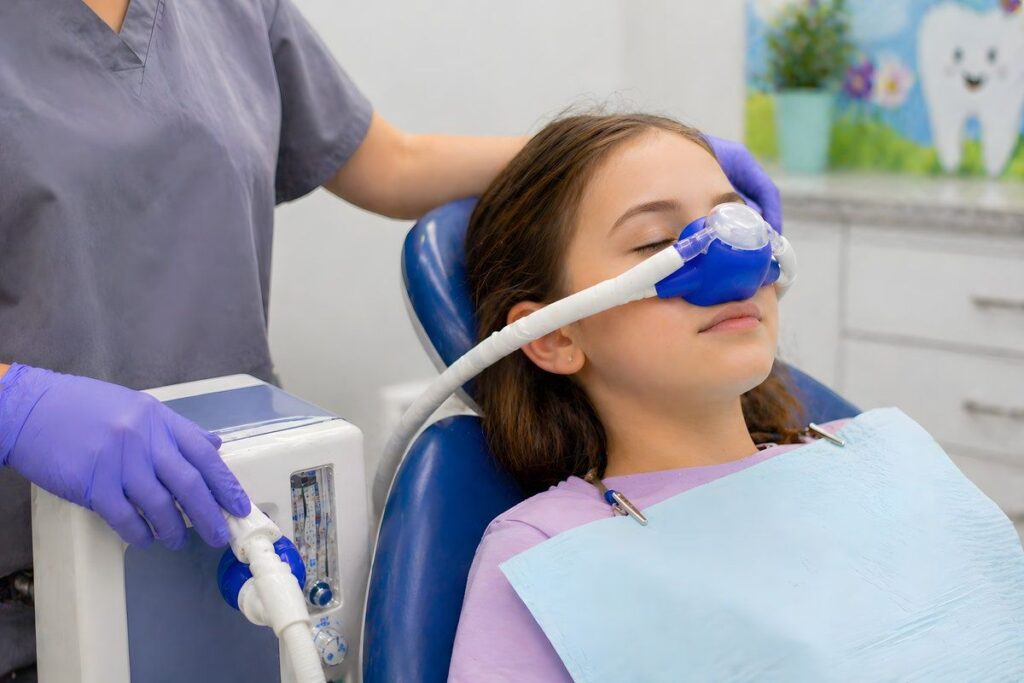
Dental sedation is a safe, well-researched way to help anxious or very young children get through dental treatment comfortably, and pediatric dentists have used it successfully for decades under carefully controlled conditions. A child who cries through every cleaning, freezes at the sight of the dental chair, or refuses to open their mouth is not being difficult, they are anxious, and that anxiety is real. Dental fear affects a significant portion of children, and when left unaddressed, it can lead to missed appointments and preventable oral health problems down the road. Fortunately, there are safe, well-established options that help children stay calm during dental care, and understanding them can make a meaningful difference for your family.
At Johns Creek Dental Associates, we see children regularly and know how important it is to make every visit feel manageable. Dr. Choi and our team take the time to build trust with young patients, and we offer nitrous oxide sedation for children who need a little extra support to stay comfortable throughout their appointment. We also carry this same approach into a child’s very first visit, so families never have to guess what an appointment will look like before they arrive.
What Is Dental Sedation?
Dental sedation involves the use of medication to help patients feel relaxed during dental procedures. For children, it is most commonly considered when a procedure requires the child to remain still for an extended period, when anxiety runs high enough to interfere with care, or when a child has had a difficult experience in a dental setting before. Not every type of sedation is appropriate for every child or practice setting, which is why understanding the options matters, and why a conversation with your child’s dentist should always come first.
Common Types Used in Dentistry
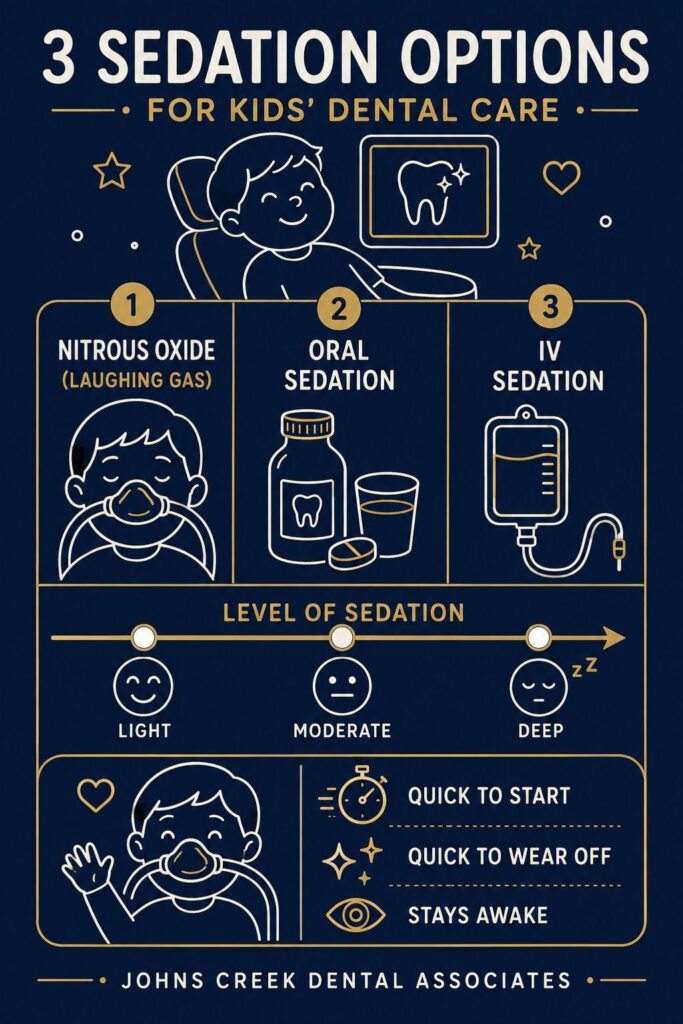
There are a few different approaches to sedation dentistry, each producing a different level of effect.
- Nitrous oxide: Often called laughing gas, this inhaled option works quickly and clears the body just as fast. Children breathe it through a small nose mask, stay fully awake, and feel calm and at ease throughout the visit
- Oral sedation: A liquid or pill taken before the appointment that creates deeper relaxation. It requires more preparation and a longer recovery window compared to nitrous oxide
- IV sedation: Delivered directly into the bloodstream for more significant sedation, typically reserved for complex cases or children with high medical needs. This option requires a specialist and advanced monitoring
For children with extensive treatment needs or significant medical complexity, general anesthesia performed in a hospital or surgical center may also be considered, though this option is reserved for cases that go well beyond routine dental anxiety. We offer nitrous oxide at our Johns Creek office, which is the most widely recommended sedation method for children in a general dental setting.
What Happens During a Sedation Visit
Knowing what to expect can ease a lot of the uncertainty parents feel before a child’s first sedation visit. Before the appointment, we review your child’s medical history and ask about any recent illnesses, since a stuffy nose or respiratory infection can affect how well nitrous oxide works on a given day. Most children do not need to change their eating routine for nitrous oxide alone, though we will let you know in advance if any adjustment applies to your child’s specific treatment plan.
During the appointment, your child breathes the gas through a small nose mask while remaining fully awake and able to answer questions. Our team gradually adjusts the flow of oxygen and nitrous oxide until your child feels calm, and we monitor their breathing, color, and responsiveness throughout the visit. If your child needs a local anesthetic for the procedure itself, it can be given while they are already relaxed from the nitrous oxide, which many children find far less stressful than an injection alone.
Once treatment is finished, we switch your child back to regular oxygen for a few minutes before removing the mask. This step clears the nitrous oxide from their system quickly and helps prevent grogginess on the way home.
Is Nitrous Oxide Safe for Children?
Yes, and the research clearly backs that up. Nitrous oxide has one of the longest safety records of any sedation method used in pediatric dentistry, and it is endorsed by leading dental and medical organizations. A retrospective study published by the National Institutes of Health found that nitrous oxide-oxygen sedation in pediatric patients was associated with no adverse events across all treatment sessions, supporting its well-established favorable safety profile. One of the biggest advantages of nitrous oxide is how quickly it leaves the body. Within minutes of removing the mask, your child is back to their normal self, with no lingering grogginess, no extended recovery period, and no need for special transportation home. For parents managing school schedules and busy afternoons, that matters.
Possible Side Effects and How We Monitor Safety
Nitrous oxide has an excellent safety profile, but like any medication, it can cause mild, short-lived side effects in some children. Occasional nausea, lightheadedness, or a brief headache after the mask is removed are the most commonly reported reactions, and these typically resolve within minutes without any treatment. Our team watches your child’s breathing pattern, color, and level of alertness throughout the appointment, and we adjust the gas flow immediately if anything seems off.
Before any sedation appointment, we ask about your child’s current health, medications, and any nasal congestion, since a blocked nose can prevent nitrous oxide from working as intended. If your child has a cold or respiratory illness on the day of the visit, we may recommend rescheduling rather than proceeding with sedation. According to the American Academy of Pediatric Dentistry, nitrous oxide and oxygen analgesia has an excellent safety record when administered by trained personnel using appropriate equipment and technique, and it remains one of the most studied approaches to managing dental anxiety in children.
Sedation Options Compared
Nitrous oxide, oral sedation, intravenous sedation, and general anesthesia each serve a different purpose, and the right option depends on your child’s anxiety level, medical needs, and the complexity of the planned treatment. Nitrous oxide is the mildest option and the only one we offer directly in our Johns Creek office, since children remain awake, responsive, and able to go straight back to school or activities afterward. Oral and intravenous sedation create deeper relaxation but require more preparation, a longer recovery window, and additional monitoring, which is why these options are typically reserved for children who do not respond well to nitrous oxide alone or who need more extensive treatment. General anesthesia, administered in a hospital or specialized surgical setting, is reserved for children with substantial treatment needs or significant medical complexity, and it always involves an independent, specially trained observer dedicated solely to monitoring your child throughout the procedure.
When Sedation May Be a Good Fit
Not every child needs sedation, but it may be a helpful tool in certain situations. Children who have had difficult past experiences, those with a sensitive gag reflex, or those who genuinely struggle to stay still during preventive dental treatments such as sealants or fluoride applications may benefit from the added comfort that nitrous oxide provides. It is also a reasonable option for children with special health care needs who require additional support during dental visits.
We also lean on non-sedation strategies whenever possible. Our comfort options include simple techniques like clear explanations, distraction, and a calm, unhurried pace, and many children do just fine with these alone. A positive first dental visit often sets the tone for how a child feels about future appointments, which is why we take extra time with new patients. For families already coming in for routine children’s dental exams, we can discuss whether sedation makes sense well before it is ever needed.
If your child has shown signs of dental anxiety, mention it when scheduling. Our team will assess their specific needs and walk you through whether sedation makes sense for their care plan. You can also review our full approach to sedation dentistry before your visit, so you arrive with your questions ready.
Frequently Asked Questions About Dental Sedation for Children
Will my child be able to go to school the same day as a nitrous oxide appointment?
Most children can return to school or normal activities the same day, since nitrous oxide clears the body within minutes of the mask being removed. We recommend a light snack and some quiet time immediately afterward, but there is generally no extended recovery period or special restriction beyond that. If your child received a local anesthetic as well, we suggest waiting until the numbness wears off before eating to prevent accidental cheek or lip bites.
How do I know if my child needs sedation or can manage without it?
We assess this together at your child’s appointment by talking with you about past dental experiences, current anxiety level, and the type of treatment planned. Many children do well with comfort techniques alone, such as distraction and a calm explanation of each step, while others benefit from the added support nitrous oxide provides. There is no single rule that applies to every child, so this conversation happens on a case by case basis before any sedation is used.
Can my child eat or drink before a nitrous oxide appointment?
In most cases, children can eat a light meal before nitrous oxide sedation alone, since it does not carry the same fasting requirements as deeper sedation or general anesthesia. We will always confirm specific instructions with you in advance based on your child’s treatment plan, particularly if any additional medication is involved. Following the guidance we provide helps the appointment go as smoothly as possible.
What if my child has a cold on the day of their appointment?
Nasal congestion can prevent nitrous oxide from working effectively, since your child breathes the gas through their nose. If your child has a cold, stuffy nose, or respiratory illness on the day of the visit, let our team know as soon as possible, since we may recommend rescheduling the appointment until they have fully recovered.
Is nitrous oxide the same thing as general anesthesia?
No, these are very different approaches. Nitrous oxide keeps your child fully awake, responsive, and breathing on their own throughout the appointment, while general anesthesia puts your child completely to sleep and requires specialized monitoring in a hospital or surgical setting. Nitrous oxide is reserved for milder anxiety and shorter procedures, while general anesthesia is typically used only for extensive treatment needs or significant medical complexity.
Schedule a Comfortable Visit at Johns Creek Dental Associates
At Johns Creek Dental Associates, Dr. Hah Neul Choi brings advanced training in comprehensive dental care and a genuine commitment to making every patient feel at ease, especially the youngest ones. Dr. Choi is fluent in both Korean and English, allowing us to serve the diverse families across Johns Creek, Alpharetta, Duluth, and Suwanee with personalized, attentive care. We accept most major insurance plans, including Delta Dental PPO, Blue Cross Blue Shield, Cigna Dental, MetLife, Aetna Dental, and many others.
We also offer flexible financing through Cherry and Sunbit, along with in-house membership plans, to make care accessible for every family we see. If dental anxiety has been holding your child back from the routine care they need, we are here to help make it easier. Contact us today to schedule an appointment and find out whether nitrous oxide sedation is right for your child.

About the Author
DDS | Pediatric and Family Dentistry
Dr. Hah Neul Choi brings compassionate pediatric care and comprehensive general dentistry to Johns Creek Dental Associates. She earned her dental degree from Indiana University School of Dentistry and built her early career with a strong foundation in pediatric dentistry, giving her particular insight into helping anxious young patients feel comfortable during treatment. She is an active member of the American Dental Association and the Georgia Dental Association.