
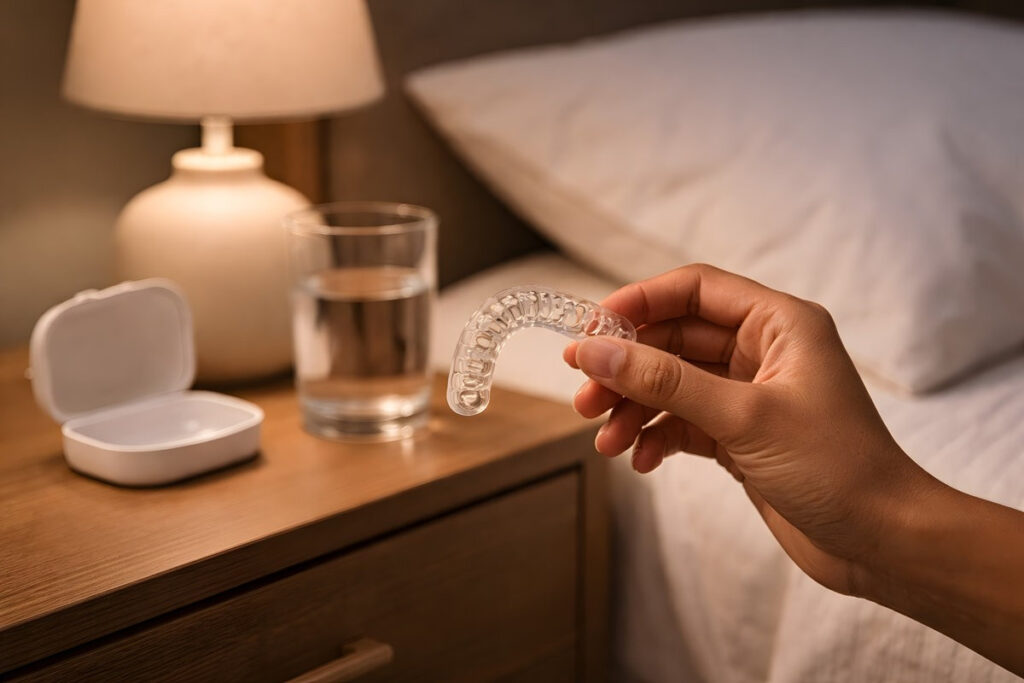
Waking up with a sore jaw, tension across your temples, and teeth that feel worn before the day has even started is not a random occurrence. For millions of people, this is the predictable result of bruxism, a condition in which the jaw involuntarily grinds or clenches during sleep. Left unaddressed, the effects accumulate quietly over time, wearing down enamel, stressing the jaw joint, and robbing you of restful sleep. Understanding what is happening inside your mouth at night is the first step toward protecting your long-term oral health.
At Johns Creek Dental Associates, we see patients throughout Johns Creek, Alpharetta, Duluth, and Suwanee who are living with the effects of bruxism and TMJ discomfort without realizing that a straightforward solution is available. As part of our restorative dentistry services, we provide custom-fitted night guards designed to protect your teeth, reduce jaw strain, and help you wake up feeling more comfortable. Our team takes a patient-first approach, taking time to understand your symptoms and build a treatment plan that fits your life.
The Connection Between Bruxism and TMJ Disorders
Bruxism and TMJ disorders are closely linked, though they are two distinct conditions. Bruxism refers to the repetitive grinding or clenching of teeth, while TMJ disorders involve dysfunction of the temporomandibular joint, the hinge connecting your lower jaw to your skull. Over time, the excessive pressure generated by grinding places significant strain on this joint, contributing to pain, stiffness, clicking sounds, and limited jaw movement.
According to research published by the National Library of Medicine, sleep bruxism affects approximately 8-10% of adults and can lead to morning jaw discomfort, temporal headaches, and restricted temporomandibular joint motion when left untreated. Because these two conditions are so closely connected, addressing one often helps alleviate the other, which is why a custom night guard is frequently the first and most effective intervention a dentist will recommend.
What a Custom Night Guard Actually Does
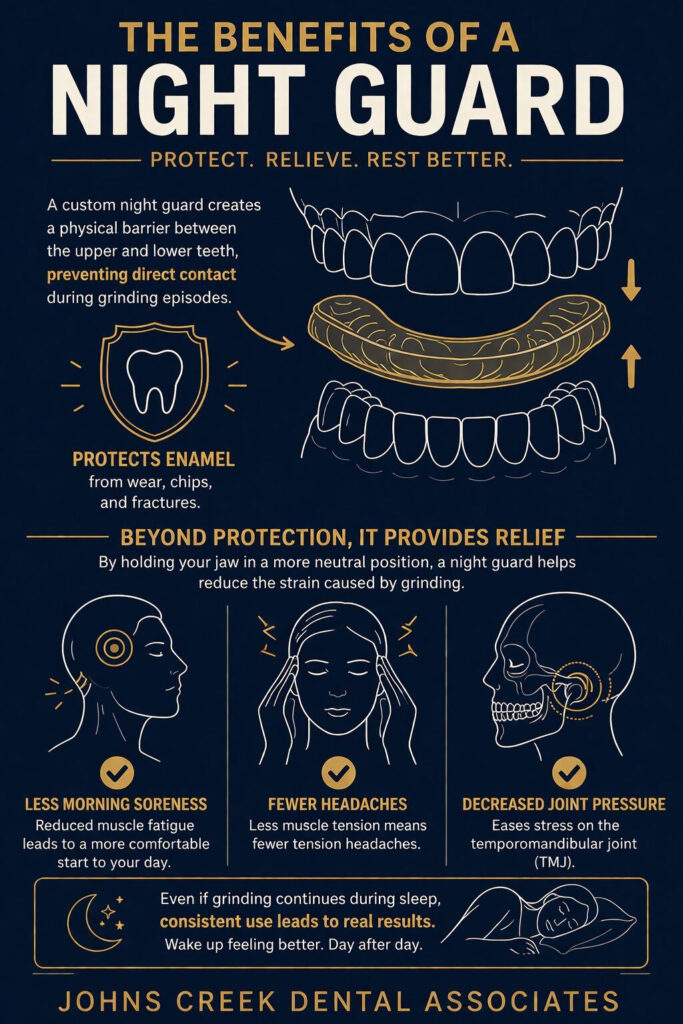
A custom night guard creates a physical barrier between the upper and lower teeth, preventing direct contact during grinding episodes. Beyond protecting enamel from wear and fractures, the appliance plays a meaningful role in relieving the muscular and joint stress associated with bruxism. When the teeth are slightly separated and the jaw is held in a more neutral position, the muscles responsible for grinding are no longer under constant load.
This reduction in muscle activity translates to less morning soreness, fewer tension headaches, and decreased pressure on the temporomandibular joint. Patients who wear their guard consistently often notice significant improvement in how they feel when they wake up, even if the grinding behavior itself continues during sleep.
Signs You May Benefit from a Night Guard
Not everyone who grinds their teeth is aware they are doing it. A partner may notice the sound before you experience any symptoms, or your dentist may detect wear patterns during a routine visit. Some of the most common indicators worth discussing with your dentist include:
- Flat or chipped teeth: Visible wear on the biting surfaces of molars or front teeth is one of the clearest signs of chronic grinding.
- Morning jaw soreness: Waking up with tight or aching jaw muscles suggests your jaw has been active throughout the night.
- Frequent tension headaches: Pressure along the temples after waking can be traced to the temporalis muscle working overtime while you sleep.
- Jaw clicking or limited movement: If your jaw pops or feels stiff when you open wide, your TMJ may already be under significant stress.
If any of these symptoms are familiar, scheduling an evaluation sooner rather than later gives us the best opportunity to prevent further damage.
Protecting Your Smile Before Problems Escalate
One of the most important reasons to address bruxism early is that enamel loss is permanent. Unlike bone or soft tissue, tooth enamel cannot regenerate once it has worn away. Patients who wait until their teeth are significantly damaged often require more complex care, including crowns, bonding, or, in more serious cases, full-mouth reconstruction. A custom night guard is a simple, non-invasive investment that helps prevent those escalating needs down the road.
Our preventive dentistry philosophy at Johns Creek Dental Associates is built around catching and addressing issues before they become complicated. When we fit a night guard, we also assess for signs of TMJ dysfunction and discuss whether additional treatment through our TMJ care services may be beneficial. For patients who feel anxious about dental appointments, we also offer sedation dentistry to help make every visit as comfortable as possible.
Frequently Asked Questions About Night Guards, TMJ Pain, and Teeth Grinding
How does a night guard help relieve TMJ pain?
A custom night guard holds your jaw in a more neutral position and keeps your upper and lower teeth from making direct contact during grinding episodes. This takes constant load off the muscles that drive bruxism, which eases pressure on the temporomandibular joint and can reduce morning jaw soreness and tension headaches.
What are the first signs I might benefit from a night guard?
Common early indicators include flat or chipped teeth, waking up with a sore or tight jaw, frequent tension headaches near the temples, and jaw clicking or stiffness when opening wide. A partner may also notice grinding sounds before you experience any symptoms yourself. If any of these sound familiar, it is worth having your dentist take a closer look.
Will a night guard stop me from grinding my teeth entirely?
Not necessarily. A night guard does not always eliminate the grinding behavior itself, but it does protect your enamel from wear and fractures and reduces the muscle and joint strain that causes morning discomfort. Most patients notice a meaningful improvement in how they feel when they wake up, even if some grinding continues.
Why is a custom-fitted night guard better than an over-the-counter one?
A custom night guard is built to match your specific bite, so it stays properly seated throughout the night and spreads pressure evenly across your teeth. Store-bought guards are made to a generic shape, which means they can shift out of place, leave certain teeth unprotected, or feel bulky enough that patients stop wearing them.
How soon should I address bruxism once I notice symptoms?
As soon as possible. Enamel that has worn away from grinding cannot regenerate, so the longer bruxism goes unaddressed, the more likely you are to eventually need more involved restorative care, such as crowns, bonding, or full-mouth reconstruction. A custom night guard is a simple, non-invasive way to prevent that escalation.
Find Relief at Johns Creek Dental Associates
Waking up in pain every morning is not something you have to accept, and a solution may be simpler than you think. At Johns Creek Dental Associates, Dr. Choi and Dr. Chen provides thorough evaluations for bruxism and TMJ-related discomfort and custom-fits night guards to your bite and needs. We serve patients throughout Johns Creek, Alpharetta, Duluth, and Suwanee with comprehensive, compassionate care rooted in lasting relationships.
If you are ready to protect your smile and start waking up without jaw pain, we would love to help. Contact us today to schedule your evaluation and take the first step toward more comfortable mornings.