
Medically Reviewed by Dr. Hah Neul Choi, DDS on July 28, 2026
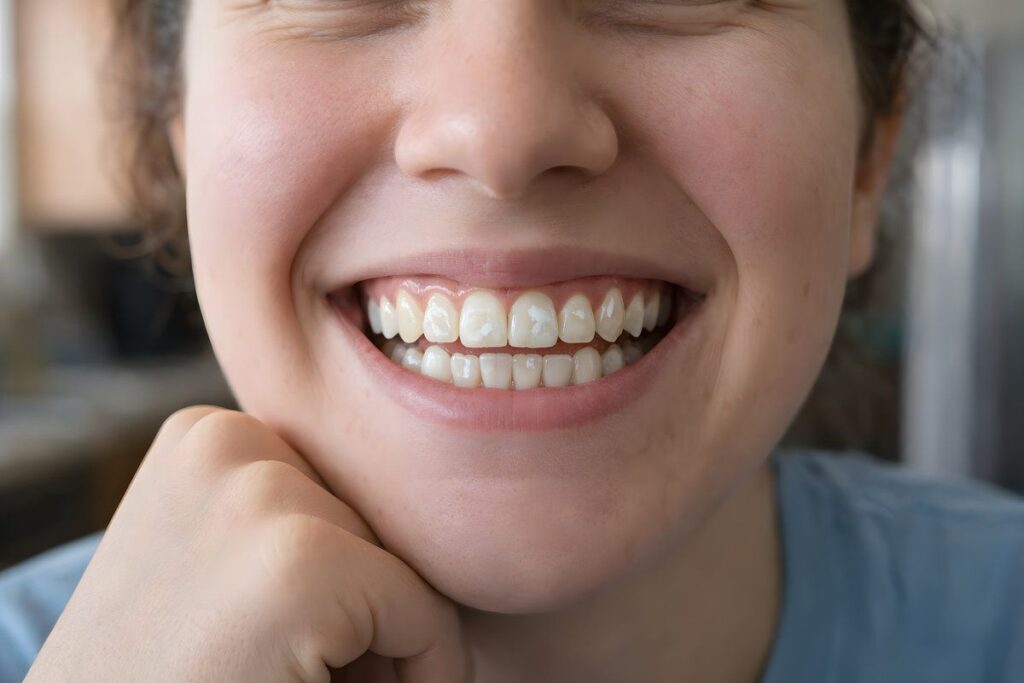
White spot removal is a fast, minimally invasive cosmetic treatment that can significantly reduce or eliminate the chalky, uneven patches that develop on tooth enamel, most commonly through a process called resin infiltration. You finish orthodontic treatment, invest years into perfecting the alignment of your teeth, and then notice something unexpected in the mirror: small, chalky patches scattered across your enamel. White spots are one of the most common and frustrating cosmetic concerns patients encounter, and they can appear even when oral hygiene has been diligent. The good news is that white spot removal is a minimally invasive, highly effective treatment that restores the natural look of your smile without drilling or veneers.
At Johns Creek Dental Associates, we offer advanced cosmetic dentistry services to help patients address exactly these types of concerns. We believe a beautiful smile is about every detail, including the even, luminous appearance of your enamel. Whether your white spots stem from orthodontic treatment, early enamel changes, or childhood fluoride exposure, our team is here to help you find the right path forward.
What Causes White Spots on Teeth?
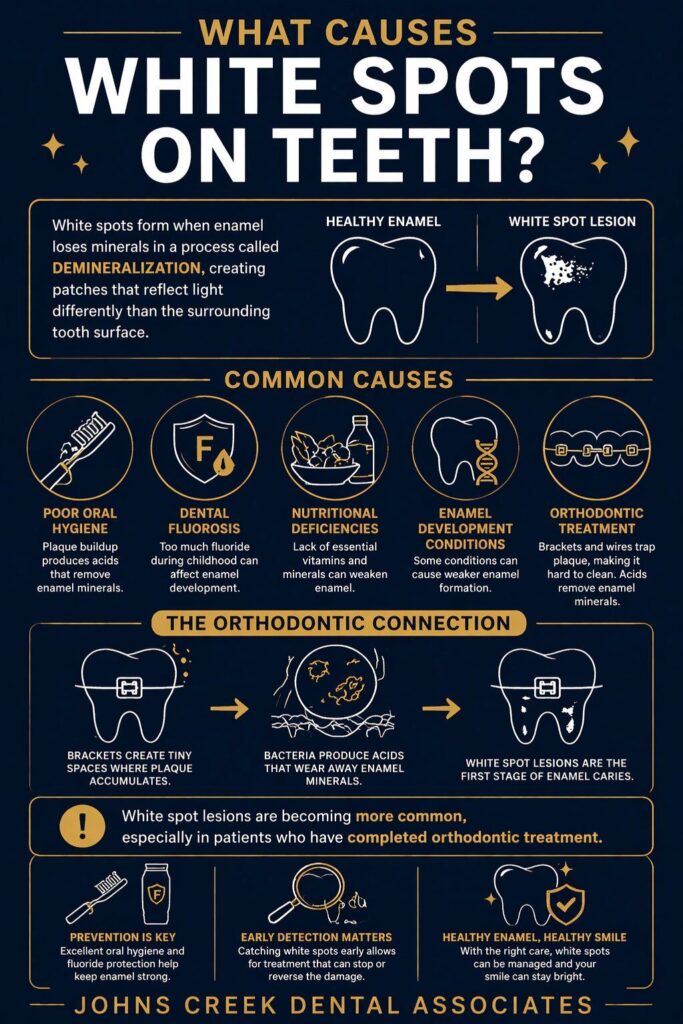
White spots develop when areas of the enamel lose minerals, creating patches that reflect light differently than the surrounding tooth surface. This process is called demineralization, and it can happen for a variety of reasons. Poor oral hygiene, dental fluorosis from excessive fluoride during childhood, nutritional deficiencies, and certain enamel development conditions are all recognized contributors.
One of the most common triggers is orthodontic treatment with fixed appliances. Brackets and wires create spaces where plaque accumulates and is difficult to remove, and the acids produced by bacteria in that plaque gradually wear away the enamel’s mineral content.
According to a systematic review published in PubMed Central, white spot lesions represent the first stage of enamel caries, and their prevalence has been increasing, particularly among patients who have undergone orthodontic care. Many patients who complete Invisalign or traditional orthodontic treatment discover these spots only after their appliances are removed.
Other Factors That Contribute to White Spots
White spots are not exclusive to orthodontic patients. Dry mouth, a diet high in acidic foods and beverages, and some medications can disrupt the balance between demineralization and remineralization in your enamel over time. Children who are exposed to excessive fluoride during early tooth development may develop dental fluorosis, which appears as white or brown streaks on the enamel surface. Protective steps such as dental sealants during childhood can help reduce plaque buildup around vulnerable areas, though sealants do not address fluorosis itself.
Understanding what caused your white spots is an important first step, as different underlying causes may respond better to different treatment approaches. During your evaluation, we assess the nature and depth of your spots before recommending a course of action.
How Does White Spot Removal Work?
The most widely used in-office treatment for white spot lesions is resin infiltration. This technique involves applying a low-viscosity resin to the affected enamel, where it fills the microscopic pores left behind by demineralization. Because the resin has a refractive index close to that of healthy enamel, it reduces the scattering of light that causes the chalky, opaque appearance of white spots. The result is a visually seamless tooth surface that blends naturally with the surrounding enamel. This technique is sometimes marketed under brand names such as Icon, though the underlying resin infiltration process works the same way regardless of which product a dental office uses. For patients whose concerns go beyond surface-level enamel changes, we may also discuss options such as porcelain veneers during your evaluation.
The procedure is completely non-invasive. There is no drilling, no removal of tooth structure, and no anesthesia required in most cases. Treatment typically takes a single appointment, and patients leave with a noticeably more uniform smile. Resin infiltration also provides a functional benefit by sealing the porous enamel, which can help slow the progression of caries in early-stage lesions.
How Long Do Results Last, and What Maintenance Is Needed?
Resin infiltration is designed as a long-term solution rather than a temporary fix. Once the resin has fully cured within the enamel, it becomes a permanent part of the tooth structure and is not intended to be reversed or removed. That said, keeping your results looking their best still depends on the same habits that protect any smile.
We recommend brushing twice daily with a fluoride toothpaste, flossing consistently, and limiting foods and drinks that stain easily, such as coffee, tea, and red wine, particularly in the days immediately following treatment. Routine dental visits every six months allow us to monitor the treated areas and catch any new demineralization early, before it has a chance to progress. With reasonable care, most patients maintain their improved appearance for years without needing to repeat the procedure.
Can I Whiten My Teeth Before or After White Spot Removal?
Timing matters when white spots and whitening are both part of your treatment plan. Because resin infiltration is matched to the current shade of your enamel, any significant whitening should generally happen first, so the treated areas blend seamlessly with your final tooth color rather than needing to be redone afterward. Once your enamel color has stabilized, we can move forward with treating the white spots themselves.
After resin infiltration, you can still use professional teeth whitening to maintain your smile going forward, since the surrounding enamel responds normally to whitening agents. The infiltrated areas themselves do not change shade the way natural enamel does, which is exactly why getting the timing right at the start makes such a difference in your final result.
What to Expect During Your Visit
After your initial assessment, we will recommend the most conservative approach for your situation. Resin infiltration is our first-line recommendation for most surface-level white spots. For cases involving fluorosis or deeper enamel hypoplasia, microabrasion or a combination approach may be more appropriate. We also discuss preventive dentistry strategies with every patient to protect their enamel going forward.
Our recommendations vary depending on your specific presentation, but they include some common elements. Here is what we typically review:
- Brushing technique: Proper brushing around vulnerable enamel areas to minimize plaque buildup
- Fluoride use: Customized recommendations based on your current oral health status
- Dietary guidance: Reducing acidic food and beverage exposure to support remineralization
- Follow-up intervals: Scheduling appropriate monitoring visits to track enamel health over time
These preventive steps help protect your results and support the long-term health of your smile after treatment.
Can White Spot Removal Really Make a Difference?
For many patients, white spots are a consistent source of self-consciousness. Even a well-aligned, otherwise healthy smile can appear irregular or dull when the enamel has visible discoloration, and no amount of whitening will correct a spot caused by structural enamel changes. White spot removal addresses the underlying optical issue directly by restoring the enamel’s ability to reflect light uniformly.
The improvement is measurable, not just perceived. Resin infiltration fills structural voids in the enamel, reducing both the physical and optical irregularities that cause white spots to stand out against healthy tooth surfaces. Patients who have lived with these spots for years often find the results more significant than they anticipated, because the treatment eliminates the contrast rather than simply masking it.
Frequently Asked Questions About White Spot Removal
Is white spot removal permanent?
Resin infiltration is intended to be a long-term, non-reversible treatment, since the resin becomes bonded within the enamel once it cures. While results are durable for most patients, deep or very severe white spots occasionally benefit from a touch-up years later. Your dentist can evaluate your results at routine visits to confirm everything still looks the way it should.
Does white spot removal hurt?
No, resin infiltration is a painless procedure that typically does not require anesthesia. Most patients feel mild pressure during the etching and resin application steps but no sharp pain, and the entire visit is usually completed in a single appointment.
Will insurance cover white spot removal?
Coverage depends on your specific plan and whether the treatment is classified as cosmetic or preventive in your case. Our team can check your benefits before your appointment so you know what to expect financially. Flexible financing options are also available for patients whose plans do not cover the procedure.
Can children get white spot removal?
Yes, resin infiltration is considered appropriate for children and teenagers, particularly those who develop white spots during or after orthodontic treatment. Because the procedure does not remove healthy tooth structure, it is often a suitable option even while a child’s smile is still developing.
What happens if I do not treat my white spots?
Untreated white spots do not necessarily worsen right away, but the underlying demineralization can progress toward an actual cavity if oral hygiene and diet are not adjusted. Treating the area early, alongside better preventive habits, helps stop that progression while also improving how your smile looks.
Schedule Your Consultation at Johns Creek Dental Associates
If white spots have been holding your smile back, the team at Johns Creek Dental Associates is ready to help you move forward. Our team brings advanced cosmetic training and a genuine commitment to patient-centered care to every appointment, serving the full diversity of the Johns Creek, Alpharetta, Duluth, and Suwanee communities with the personalized attention each patient deserves.
No matter what caused your white spots, we will work with you to find the most conservative, effective solution. Learn more about our team or contact our office today to schedule your consultation and take the first step toward a more even, confident smile.

About the Author
DDS | Cosmetic and General Dentistry
Dr. Hah Neul Choi brings continuing education in cosmetic dentistry and facial esthetics to Johns Creek Dental Associates, alongside her foundation in comprehensive general care. She earned her dental degree from Indiana University School of Dentistry and is a member of the American Academy of Cosmetic Dentistry. Dr. Choi and our team take a conservative, detail-oriented approach to every smile enhancement.